Comparison: High Strength vs Cold Rolled Steel
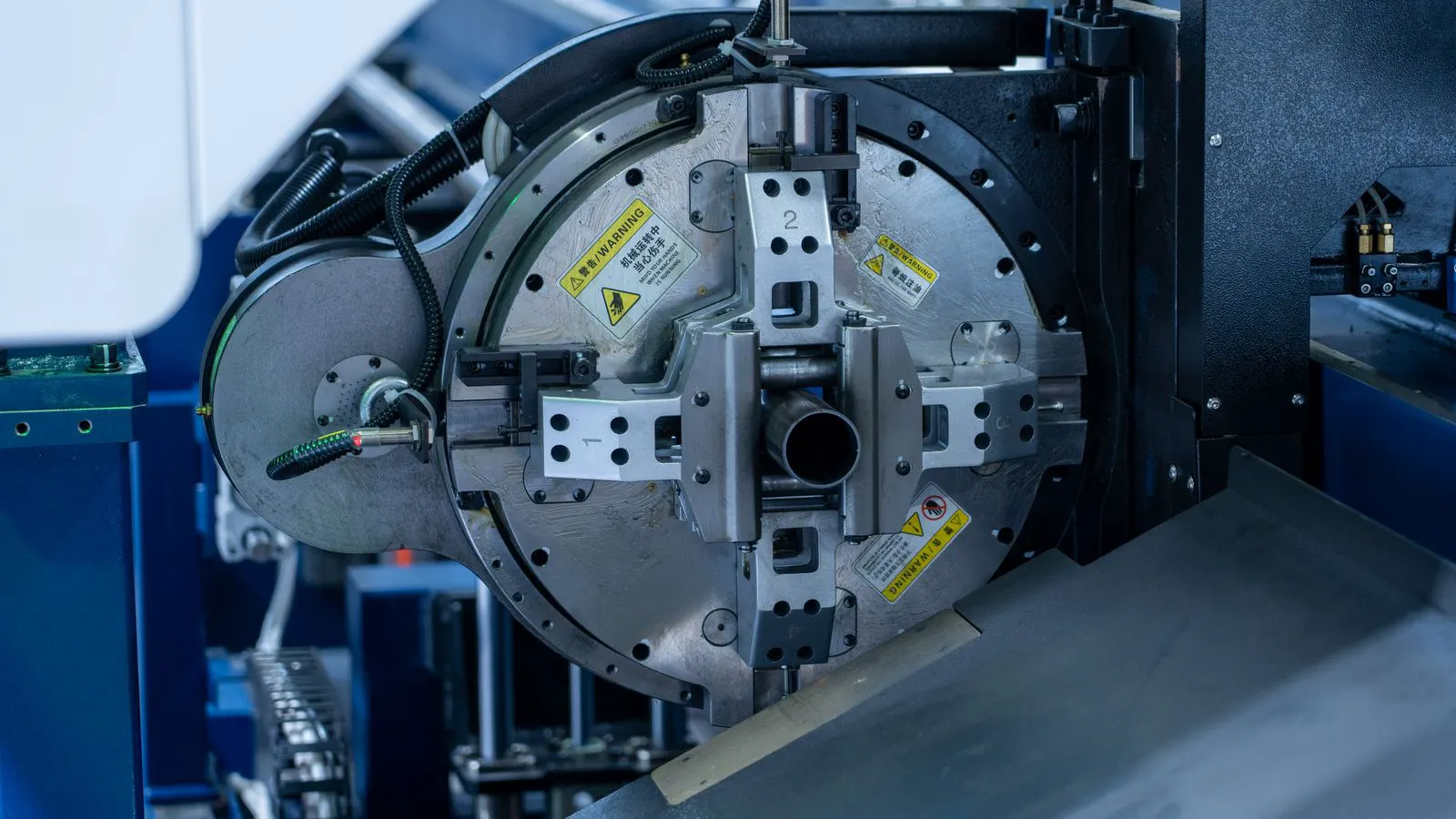
High strength steel reduces part weight but increases tool wear. Cold rolled steel offers lower cost and easier processing. Engineers must balance mass savings against die life, press tonnage, and surface finish requirements when selecting the correct grade.
- High strength steel allows thinner sections for the same structural strength, reducing part mass.
- Cold rolled steel is generally easier to process, cheaper, and easier to weld after forming.
- Tool wear accelerates significantly when using high strength grades, requiring sharper punches and better lubrication.
- Part function and safety standards often dictate the material choice more than cost.
- Always verify mill certificates to confirm the actual yield strength of the incoming coil.
The Core Trade-Off: Mass vs Die Life
Engineers face a direct conflict when selecting sheet steel for stamped parts. High strength steel (HSS) offers the ability to use thinner gauge material while maintaining the required load capacity. This reduces part weight, which benefits fuel efficiency and handling. The trade-off is tool wear.
HSS resists deformation, which means the punch and die must work harder to cut and form the material. The tooling wears out faster. Maintenance intervals shorten. Press tonnage requirements increase. Cold rolled steel presents the opposite profile. It is softer, cheaper, and easier to work. However, it requires thicker sections to achieve the same strength, adding weight to the final part.
Consider a door hinge bracket for a mid-size vehicle. If you use standard cold rolled steel, you might need a 1.5 mm section to handle the door weight and vibration. Switching to a 1.0 mm HSS grade achieves the same load capacity with 30% less steel. The part becomes lighter. The vehicle gets better fuel economy. But the die set that cuts and bends that 1.0 mm HSS will wear down significantly faster than the set cutting 1.5 mm cold rolled steel. The punch tips will round off. The die edges will chip. The maintenance crew spends more hours grinding and replacing components.
The decision depends on the part function. A chassis bracket in a vehicle has different requirements than a consumer appliance enclosure. The structural role of the component drives the material selection. If the part sits in a suspension arm, weight reduction is a primary goal. If the part is a shelf inside a washing machine, weight reduction offers no benefit, and the cost of HSS processing simply increases the bill without value.
How Yield Strength Changes Processability
Yield strength determines the force needed to deform the sheet. Standard cold rolled steel typically has a lower yield point. HSS grades have significantly higher yield points. This difference changes the entire stamping process.
Punches must be sharper to cut HSS cleanly. Dull edges create burrs and tear the material. Die clearance must be tighter to avoid bending the material before the shear action occurs. Forming radii must be larger to prevent cracking. The press must apply more force to overcome the resistance.
When you stamp a thin sheet of HSS, the punch does not just cut. It has to overcome the material’s resistance to bending. If the clearance is too large, the sheet bends before the punch breaks through. The resulting edge is rough and jagged. The part may fail in a shear test. If the punch is dull, it crushes the material rather than slicing it. You get a thick burr on the cut edge that requires deburring. In cold rolled steel, the same punch with a slightly larger clearance cuts cleanly. The material yields and breaks through with less resistance.
Cold rolled steel is more forgiving. It forms easier. It cuts with less force. However, it springs back more readily. Holding features are needed to maintain shape. The surface finish may require more work if the part is exposed.
Springback is a major headache with soft steels. You punch a hole or bend a flange, and the material tries to return to its original shape. To counteract this, stampers use overbending or overcutting techniques. They bend the part past the target angle and hold it there with clamps until it cools or the force is released. With HSS, springback is lower because the material holds its shape better once deformed. But because it is harder to deform, you need more force to get it to that overbend point. The press needs to be able to deliver that force without stalling.
Comparison of Material Options
The table below summarizes the main differences between the two material families.
| Option | Best for | Limitations |
|---|---|---|
| Standard Cold Rolled Steel | General purpose parts, enclosures, low cost applications | Heavier parts, lower structural strength, higher springback |
| High Strength Steel | Weight critical parts, structural brackets, automotive components | Higher tool wear, increased press tonnage, harder to weld |
| Ultra High Strength Steel | Maximum strength in minimum thickness, safety critical parts | Extremely high tool wear, difficult forming, high cost |
| Coated Cold Rolled Steel | Parts requiring corrosion resistance in non-structural roles | Coating limits welding, adds cost, can affect paint finish |
| Coated HSS | Weight reduction with corrosion protection | Highest tool wear, coating integrity issues during forming |
Each option has a specific place in the product design. The choice is rarely about which material is “better.” It is about which material fits the part requirement.
For example, a car door panel uses coated cold rolled steel. The primary function is to enclose the interior and protect against weather. It does not need to support heavy loads. The coating prevents rust on the inside of the door. The cost of the coating is justified by the longer service life of the part.
In contrast, a side impact beam uses Ultra High Strength Steel (UHSS). The beam must absorb crash energy without permanent deformation. The material must be extremely strong to keep the passenger compartment intact. The tooling cost is high, and the die life is short, but the safety benefit is non-negotiable. The part is thin, but it behaves like a thick structural member.
Tooling Wear and Maintenance Costs
Tool wear is the most visible cost difference between HSS and cold rolled steel. HSS abrades die edges faster. The hard surface of the steel grinds against the softer tool face. Punches also wear on the edges.
This wear affects part quality. Burrs increase. Surface finish degrades. Dimensional accuracy drifts. Maintenance teams must inspect tooling more frequently. They must sharpen or replace punches sooner. The downtime between repairs increases.
Consider a production run of 10,000 brackets. If you use cold rolled steel, the die set might last for 50,000 parts before it needs sharpening. The cost of that sharpening is spread over 50,000 parts. If you use HSS, the same die set might wear out after 10,000 parts. The cost of sharpening is now spread over only 10,000 parts. The cost per part for tool maintenance is significantly higher.
HSS often requires harder tooling materials. Standard tool steels may not be tough enough. You might need high-speed tool steel or hardened inserts. These materials are more expensive to buy and more difficult to machine. The tooling budget increases before production even starts.
Cold rolled steel is gentler on tooling. Dies last longer. Maintenance intervals are longer. The cost per part is lower because the tooling cost is spread over more parts. However, the part is heavier. If the application is weight sensitive, the higher material cost of HSS may be justified by the savings in fuel or payload.
Forming and Welding Considerations
Forming behavior differs significantly between the two materials. HSS has a higher yield strength, which means it resists bending. To form it, you need larger radii and more force. The risk of cracking increases if the bend is too tight. Cold rolled steel forms more easily. It can handle tighter radii.
When bending a HSS part, you must calculate the minimum bend radius. If you try to bend a 1 mm HSS sheet to a 0.5 mm radius, the outer fibers stretch beyond their limit. The metal cracks. The part is scrap. You might need to bend to a 1.5 mm radius to achieve the same angle. This changes the part geometry. The engineer must redesign the part to accommodate the larger radius.
Welding is another major factor. HSS is harder to weld. The high carbon or high alloy content can cause cracking. Preheating and careful heat control are required. The heat affected zone can be a problem. Cold rolled steel welds more predictably. It is easier to manage.
If the part requires post-stamping welding, cold rolled steel is often the simpler choice. If the part is a bolted joint, HSS may be preferred for its strength. The assembly method influences the material choice as much as the stamping process.
For instance, a vehicle frame uses bolted joints. The stamped brackets are made from HSS. The bolts provide the connection. No welding is needed. The HSS strength ensures the bracket does not bend under load. If you tried to weld an HSS bracket, you would need to control the heat input carefully to avoid cracking the base material. The weldment would be more expensive to produce and harder to inspect.
Selecting the Right Grade for Your Part
The selection process starts with the part function. What load does the part carry? Is it safety critical? Is weight a factor? Does it require corrosion resistance?
For structural parts in vehicles or machinery, HSS is often the standard. The weight reduction justifies the higher tooling cost. The engineer works with the press operator to set the correct tonnage and clearance.
For enclosures, brackets, or non-structural parts, cold rolled steel is usually sufficient. The cost savings and ease of processing outweigh the need for extra strength. The part is heavier, but that is acceptable for the application.
Always check the mill certificate. The nominal grade may not match the actual yield strength. Variations in the coil can affect the stamping process. A tight tolerance on yield strength helps ensure consistent part quality.
Mill certificates provide the actual yield strength of the coil used. If the certificate says the yield strength is 350 MPa, but the actual coil varies between 340 and 360 MPa, the stamping process might behave differently. A coil with higher yield strength will require more press force. A coil with lower yield strength might spring back more. The stamping line must be set to handle the worst-case scenario. If the specification allows for a wide range, the engineer must design the tooling to handle the highest yield strength in that range.
Common Mistakes in Material Selection
Engineers often make a few errors when choosing between HSS and cold rolled steel.
- Ignoring tooling wear. They select HSS for weight savings but do not budget for the increased die maintenance.
- Underestimating press tonnage. The press may not have enough force to stamp the HSS cleanly.
- Forgetting about welding. They choose HSS for a part that must be welded, leading to cracked joints.
- Not checking the coating. The coating may not survive the forming process, leading to corrosion issues.
- Assuming all HSS is the same. Different grades have different forming limits. The data sheet must be reviewed.
These mistakes lead to scrap, rework, and delays. A careful review of the part requirements and the tooling capabilities prevents most of these issues.
For example, a team might select HSS for a suspension arm to save weight. They calculate the press tonnage required and find it fits their existing press. However, they do not account for the die wear. After two months of production, the die edges are too worn to produce clean cuts. The line stops for repairs. The production schedule is delayed. The cost of the delay and the repair exceeds the weight savings achieved by using HSS.
Final Considerations
The choice between HSS and cold rolled steel is a balance. HSS provides weight reduction and higher strength. Cold rolled steel provides lower cost and easier processing.
The engineer must look at the whole picture. Part function, weight, cost, tooling, and assembly all matter. There is no single best material. There is only the material that fits the specific part.
Review the design requirements. Check the tooling condition. Verify the material specification. Make the selection based on the part function, not just the cost of the coil. The result will be a stamped part that works as intended and lasts as long as required.
Frequently asked questions
Can cold rolled steel be used for weight critical applications?
Cold rolled steel is heavier than HSS for the same strength. It can be used if the weight penalty is acceptable, but HSS is typically preferred for weight critical parts.
How much more tool wear does HSS cause?
HSS causes significantly more tool wear than cold rolled steel. The exact amount depends on the grade, thickness, and tool material. Expect shorter maintenance intervals with HSS.
Is HSS harder to weld than cold rolled steel?
Yes. HSS is generally harder to weld due to higher carbon or alloy content. It requires careful heat control to prevent cracking. Cold rolled steel welds more easily.
What should I check on the mill certificate?
Check the yield strength, tensile strength, and chemical composition. The nominal grade may vary. The actual values affect the stamping process and part quality.
Can I switch from cold rolled steel to HSS without changing the tooling?
You may need to change the tooling. HSS requires sharper punches, tighter clearances, and potentially stronger dies. The press may also need more tonnage. Always test before production.