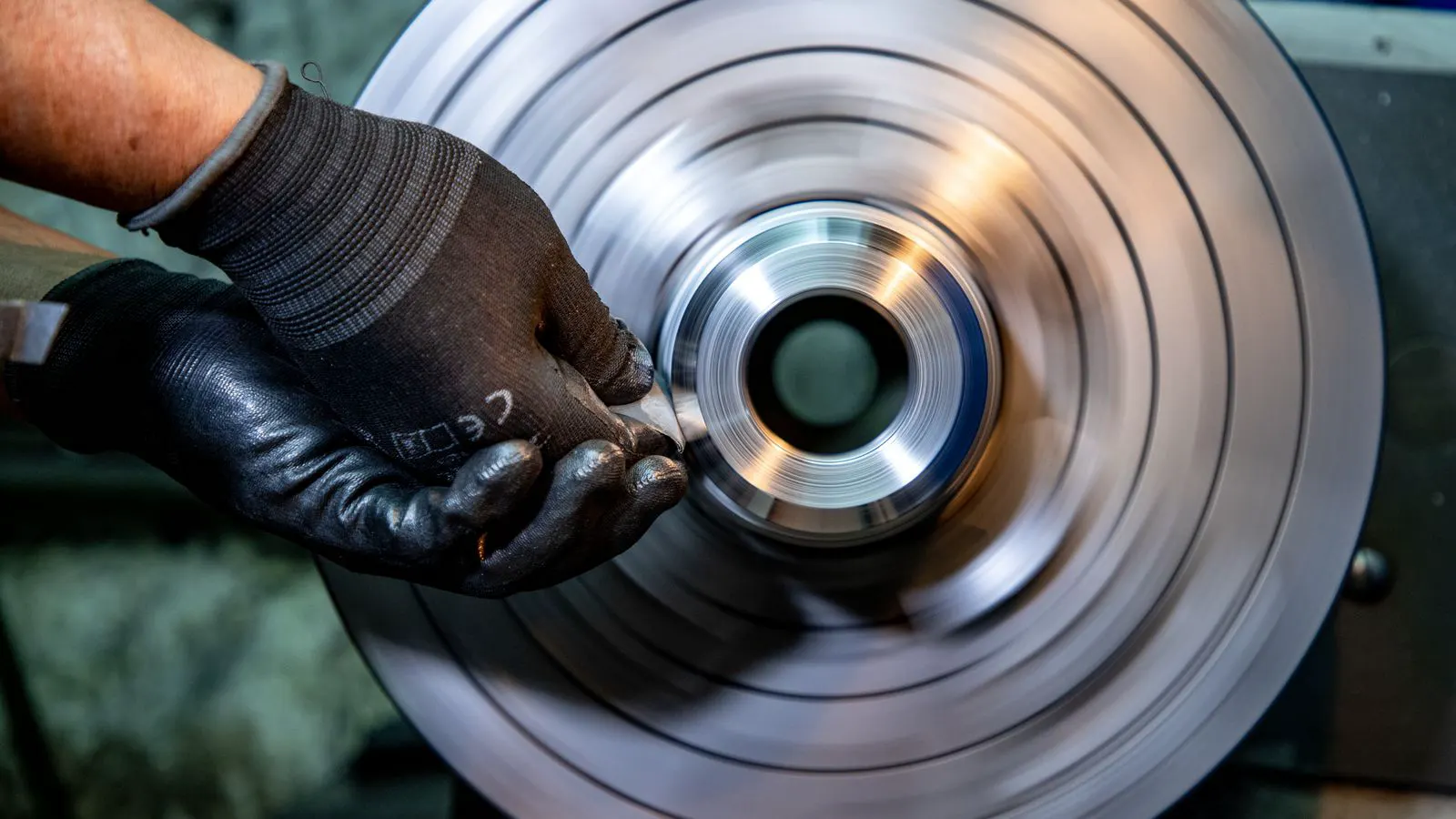
Outlook: Lightweight Steel Stamping in EVs

Lightweight steel stamping changes EV sourcing by demanding stronger supplier controls, tighter material tolerances, and new design checks. Importers must adjust press tonnage, coating requirements, and supplier audits to handle advanced high-strength materials without sacrificing part quality.
- Lightweight steel parts require suppliers to manage higher formability limits and tighter springback controls than standard automotive sheet.
- Importers should verify supplier press tonnage and die design capability before approving new EV component specifications.
- Material certifications and coating compatibility checks must cover the full production lifecycle, not just raw material delivery.
- Design for lighter gauge steel increases sensitivity to tool wear, requiring more frequent die maintenance and quality inspections.
- Sourcing lightweight steel parts for EVs demands closer collaboration with suppliers on process validation and traceability.
How Advanced High-Strength Steel Changes the Stamping Process
Advanced high-strength steel (AHS) and ultra high-strength steel (UHSS) are replacing standard deep-drawing grades in many electric vehicle (EV) platforms. These materials offer higher yield strength at lower gauge thicknesses. The result is lighter structural brackets, battery enclosures, and body panels.
For importers, this shift changes what to request from suppliers. A supplier who can stamp a 1.5 mm bracket from standard steel may struggle with a 1.0 mm bracket from a UHSS grade. Formability limits differ. The same die may crack, or the part may spring back beyond tolerance.
Buyers must account for these differences early. Press tonnage, die geometry, and lubrication strategy all require adjustment. The supplier must demonstrate capability with test runs, not just material data sheets.
What Designers Must Check Before Releasing Lightweight Part Specs
Designers often reduce gauge thickness to cut weight. They may not fully account for how the material behaves during stamping and assembly. A bracket designed for 1.2 mm standard steel may need 1.5 mm when switched to a high-strength grade to maintain stiffness and weldability.
The first check is bend radius. High-strength steels have lower minimum bend radii than deep-drawing grades. If the design includes tight inner radii, the supplier may need to modify the die or reject the part.
The second check is springback. Thinner high-strength steel can rebound after release. This creates gaps in mating surfaces or misalignment in assemblies. Buyers should request springback compensation in the die design.
The third check is weldability. Many UHSS grades are difficult to spot weld. If the stamped bracket joins to a battery pack or chassis, the supplier must confirm the material meets the welding specification.
How Press Tonnage and Die Design Must Be Re-evaluated
Lighter gauge steel reduces the force needed for forming, but higher yield strength increases resistance to bending. The net effect is not always lower press tonnage. Sometimes the required tonnage stays the same, or increases, depending on the part geometry and material.
A 1.0 mm high-strength steel part with complex contours may require more tonnage than a 1.5 mm standard steel part with simple contours. Importers should not assume that lighter gauge means lower press size.
Die design must also change. High-strength materials transmit higher peak loads to the die. This accelerates die wear. Suppliers may need thicker die plates, stronger support structures, or more frequent maintenance intervals.
Buyers should ask suppliers for a press tonnage calculation for each part. The calculation should include a safety factor for material variation and die wear. If the supplier cannot provide this, the part design is not ready for production.
Material Certifications and Traceability Requirements
EV components require strict traceability. Lightweight steel parts are no exception. Each heat lot of sheet must be traceable from the mill to the stamped part. This protects against material substitution or quality drift.
Importers should require suppliers to provide mill test reports for every production lot. The report should confirm the grade, thickness, mechanical properties, and surface condition. Some buyers also require coating certifications, especially for corrosion resistance.
Coating compatibility is a common issue. Galvanized coatings, e-coat, and other finishes must be compatible with the stamping process. High-strength steels may require specific surface treatments to prevent cracking during forming.
Buyers should include coating specifications in the purchase order. The supplier must confirm that the coating does not interfere with bending, welding, or assembly. Test data should be available on request.
Sourcing Strategy: How to Qualify Suppliers for Lightweight Steel Parts
Qualifying a supplier for lightweight steel stamping is different from qualifying one for standard automotive parts. The supplier must have experience with advanced materials and the tooling to support them.
The first qualification step is a capability audit. The supplier should show press tonnage, die design software, and material handling experience. They should provide examples of stamped parts made from similar grades.
The second step is process validation. The supplier should run a trial batch and provide a process capability study. This study shows whether the part dimensions stay within tolerance over repeated cycles.
The third step is supplier agreement. The contract should include requirements for material certification, die maintenance schedules, and first article inspection. These terms protect the buyer from quality failures.
Importers should also consider geographic sourcing. Some regions have stronger capability in high-strength steel stamping. If sourcing from a region with limited experience, the buyer should invest more in front-end engineering support.
Practical Checklist for Importers Preparing for Lightweight EV Parts
Use this checklist when reviewing a new lightweight steel part for EV use.
- Confirm material grade and thickness with the supplier. Request the mill test report.
- Verify press tonnage calculation with a safety factor.
- Check bend radius and springback compensation in the die design.
- Confirm weldability and coating compatibility with the assembly process.
- Require traceability and first article inspection in the supplier agreement.
- Schedule a capability audit if the supplier has no prior experience with the specific grade.
This checklist reduces the risk of late-stage design changes or production failures. It also makes it easier to compare supplier quotes on a level playing field.
How to Prepare Your Team for the Shift
Preparing your team for lightweight steel stamping involves more than updating supplier lists. Design engineers must learn how high-strength materials behave during forming. Procurement teams must understand what documentation to request. Quality teams must adjust inspection plans.
The design team should review each part for formability before release. They should ask the supplier for a formability assessment. If the design includes tight radii or thin features, the supplier may need to suggest changes.
Procurement should update supplier questionnaires. The questionnaire should ask about press tonnage, die design capability, and material handling experience. It should also ask about previous experience with the specific EV part family.
Quality should update inspection plans. Springback and coating defects are more common with high-strength steel. The inspection plan should include checks for surface defects, dimensional accuracy, and coating adhesion.
This preparation reduces the risk of costly rework and delays. It also positions the buyer to make informed decisions when selecting suppliers and materials.
Comparison Table: Standard Steel vs High-Strength Steel Stamping
| Factor | Standard Deep-Draw Steel | High-Strength Steel |
|---|---|---|
| Typical Gauge Range | 1.0 mm to 2.0 mm | 0.8 mm to 1.5 mm |
| Formability | High, suitable for complex contours | Lower, tighter bend radii required |
| Springback | Moderate, manageable with die compensation | Higher, requires careful die design |
| Press Tonnage | Lower for thin gauge, higher for thick gauge | Variable, depends on geometry and grade |
| Die Wear | Moderate, standard maintenance | Higher, requires stronger dies and frequent checks |
| Weldability | Good, standard spot welding | Variable, may require special procedures |
| Coating Requirements | Standard galvanized or e-coat | Specific surface treatments to prevent cracking |
| Traceability Needs | Basic lot tracking | Full heat lot tracking with mill test reports |
Key Takeaways for Buyers
- Lightweight steel parts require more supplier controls than standard automotive parts.
- Design checks for bend radius, springback, and weldability are mandatory.
- Press tonnage and die design must be validated for each part and material combination.
- Material certifications and traceability must cover the full production lifecycle.
- Supplier qualification must include capability audits and process validation.
Final Note on Planning
Lightweight steel stamping is not a one-time change. It is a continuous adjustment to design, sourcing, and quality control. Importers who plan for this shift early will avoid costly surprises. They will also be better positioned to source competitive EV components.
The key is to treat lightweight steel stamping as a distinct capability. It is not just a material swap. It requires new checks, new documentation, and new supplier requirements.
Buyers who build these controls into their process will see fewer failures and smoother production. They will also have more confidence when selecting suppliers for EV metal parts.
Frequently asked questions
Can standard automotive suppliers handle lightweight steel stamping for EVs?
Some can, but not all. Suppliers must have experience with advanced high-strength steels and the tooling to support them. A capability audit is required before qualification.
What is the biggest risk when switching from standard steel to high-strength steel?
Springback and die wear are the biggest risks. High-strength steel rebounds more after forming and wears dies faster. Both must be addressed in die design and maintenance planning.
Do I need new press equipment for lightweight steel parts?
Not always. Press tonnage depends on the part geometry and material grade. A 1.0 mm high-strength part may require the same or more tonnage than a 1.5 mm standard part. Validate with the supplier.
How should I verify material quality for EV components?
Require mill test reports for every production lot. The report should confirm the grade, thickness, mechanical properties, and surface condition. Coating certifications are also needed if applicable.
What documentation should I include in the supplier agreement?
Include requirements for material certification, die maintenance schedules, first article inspection, and traceability. These terms protect against quality failures and material substitution.