Outlook: Smart Die Monitoring in Stamping Production
Smart die monitoring tracks stamping process variables to predict failures before scrap is produced. This article outlines five practical shifts in monitoring, data integration, and maintenance planning. Buyers should prepare by standardizing sensor placement, validating data sources, and updating press control protocols.
- Smart die sensors shift maintenance from reactive repair to scheduled intervention based on press data.
- Buyers should standardize sensor placement and data protocols to make monitoring useful across multiple lines.
- Integrating die monitoring with press controllers creates a closed loop for real-time process adjustment.
- Data validation is the first step. Without clean data, alerts become noise rather than guidance.
- Start with high-volume stamping lines where downtime cost justifies the monitoring investment.
A stamping die is a precision tool. When a tool wears, burrs, or shifts, the stamping process changes. The parts get harder to handle. The scrap rate goes up. The press operator sees a problem before the maintenance team does, but the damage is already done. Smart die monitoring exists to close that gap. It puts sensors and data collection into the die and the press so the team can see the process state in real time and predict trouble before a break occurs.
How die monitoring changes the maintenance cycle
Traditional die maintenance follows a schedule. A die gets inspected every shift, or after a fixed number of strokes, or when a problem appears. That approach works for low-volume work. It fails when a high-volume line runs twenty hours a day and a small change in the stamping process leads to thousands of bad parts before anyone notices.
Smart die monitoring changes the cycle. Sensors inside the die track force, displacement, temperature, and vibration. The data goes to a controller that compares readings against known good values. When a value drifts, the system flags the condition. The maintenance team can schedule a die change during the next planned stop instead of stopping the line for an emergency repair.
This shift requires a change in how buyers think about die life. A die no longer has a fixed service interval. Its life is tied to process data. A die that runs on soft aluminum may last longer than a die running on hardened tool steel, even under the same stroke count. Monitoring lets the buyer define life by condition rather than by calendar.
What sensors actually measure in a stamping die
A smart die uses several sensor types. Force sensors measure the tonnage applied during each stroke. Displacement sensors track the movement of the punch and die face. Temperature sensors monitor the heating of the die cavity, which changes with material thickness and speed. Vibration sensors detect impacts that indicate a loose pin, a worn bearing, or a misaligned punch.
Each sensor type serves a different purpose. Force data reveals whether the press is overloading the die. A rising force trend means the material is getting thicker, the die is getting worn, or the press is not reaching full tonnage. Displacement data shows whether the punch is traveling the correct distance. A change in travel can signal a worn guide bushing or a misaligned die.
Temperature data matters for high-speed stamping. Friction in the die cavity generates heat. Excess heat changes the material properties and can weaken the die surface. It can also cause the lubricant to break down. Tracking temperature gives the operator a way to adjust speed, lube flow, or material feed before a quality issue appears.
Vibration data is the most direct indicator of mechanical health. A sharp spike in vibration during a stroke can mean a punch is striking a die surface that is not flat. A gradual increase can mean a guide pin is wearing. The data is noisy, but with proper filtering, it becomes a reliable early warning.
How press controllers integrate die data
A smart die is only useful if the data reaches a decision point. The sensors send signals to a controller, which can be part of the die, part of the press, or a separate data acquisition unit. The controller processes the data and sends it to the press HMI, a PLC, or a cloud platform.
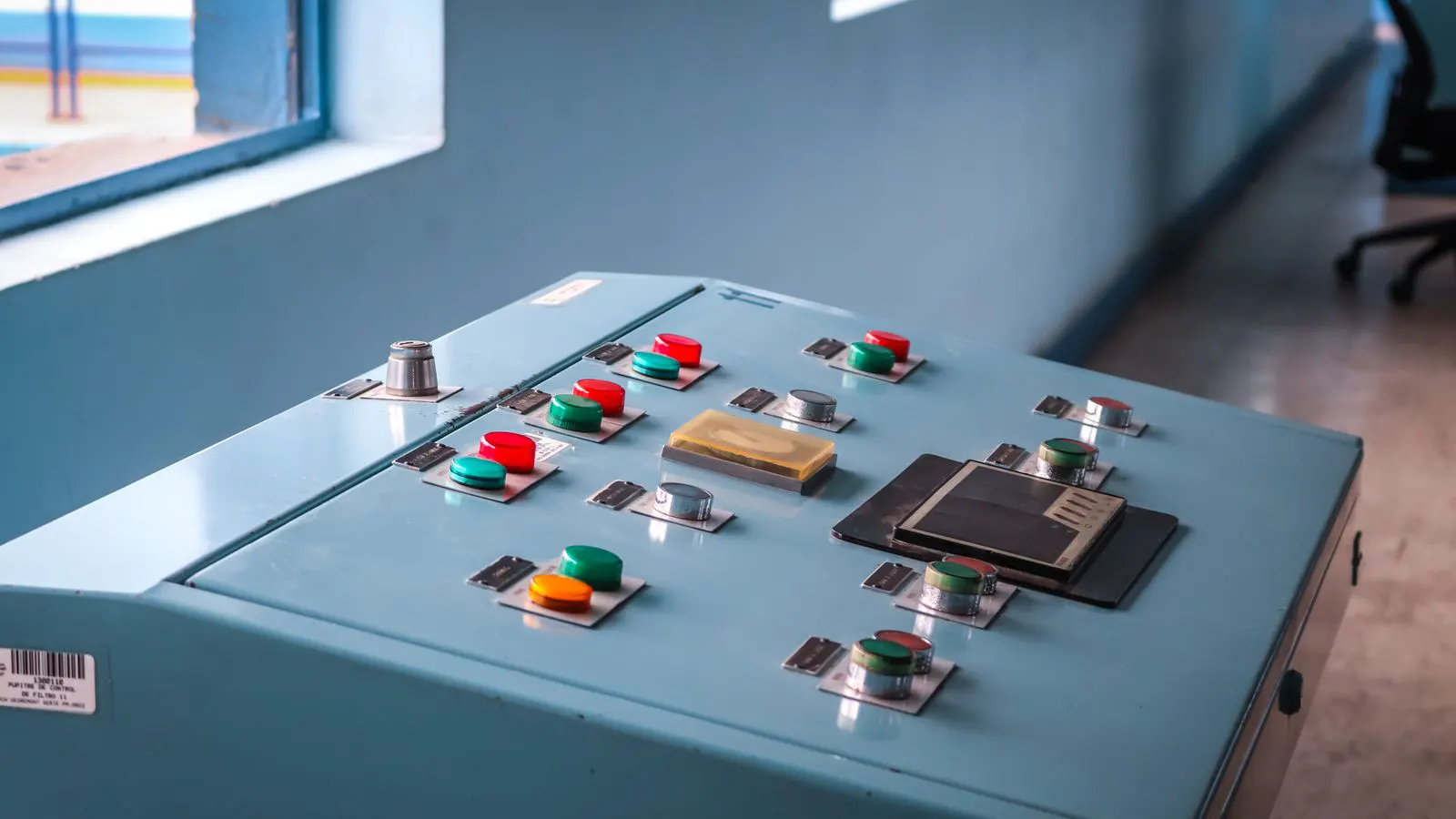
The press HMI displays live readings. The operator sees force, displacement, and temperature on the screen. If a value crosses a threshold, the HMI shows an alert. The operator can slow the press, stop the line, or call maintenance.
The PLC can take more direct action. If the force sensor reads above a set limit, the PLC can reduce press speed. If the vibration sensor detects a repeated fault, the PLC can stop the press and log the event. This closed loop keeps the stamping process within safe limits without waiting for a human to react.
Cloud integration adds another layer. Data from multiple presses and multiple dies goes to a central server. The buyer can compare die performance across lines. They can see how a new die lot performs against an old one. They can track maintenance costs by die family.
The integration step is where most projects stall. The die sensor must talk to the press controller. The press controller must talk to the plant network. Each press may have a different control system. Each die may have a different sensor layout. Standardizing these interfaces is a major part of the work.
Five shifts buyers should plan for
The move to smart die monitoring is not a single purchase. It is a series of changes across the stamping operation. Buyers who plan for these shifts will see value. Buyers who treat it as a sensor upgrade will get frustrated.
The five shifts are practical. They happen in the plant, on the line, and in the maintenance records.
-
From reactive repair to predictive scheduling. The maintenance team stops waiting for a broken die. They plan interventions based on sensor data. A die that shows a rising force trend gets scheduled for inspection. A die with a vibration spike gets pulled for a quick check. This changes the work order system. The work order now references sensor data, not just a visual symptom.
-
From fixed intervals to condition-based service. The old schedule says the die gets inspected every ten thousand strokes. The new method says the die gets inspected when a parameter crosses a threshold. This can extend service life for well-running dies and shorten it for struggling ones. The buyer must update die maintenance procedures to match.
-
From isolated press data to networked plant data. Press data no longer stays on the press. It goes to a central system. This changes how the plant manages information. The buyer needs a network that can handle the data volume. They need a storage solution. They need a role for the data.
-
From operator intuition to operator guidance. The operator still knows the sound of a press. But now the HMI tells them what the data says. The operator must learn to read the new displays. The training changes. The shift from listening to the press to reading the screen requires a new skill set.
-
From die as a static asset to die as a dynamic variable. The die is no longer just a part number. It is a set of live values. The buyer must think about die data in procurement and in quality control. A die that arrives with a bad baseline is a problem. A die that drifts out of spec is a problem. The data makes both visible.
What a monitoring setup looks like on the floor
A basic smart die setup has three parts. The first is the sensor package. The second is the controller. The third is the display.
The sensor package mounts inside the die cavity. For a progressive die, it may sit between the punch and the die face. For a transfer die, it may attach to the transfer table or the die carrier. The package is compact. It connects to the controller with a short cable. The cable runs to the press frame.
The controller sits near the press. It reads the sensor signals and processes them. It can be a small box with a screen, or it can be a module in the press control cabinet. It sends the processed data to the HMI or to the plant network.
The display is on the press HMI. It shows live values. It shows trends over time. It shows alerts when thresholds are crossed. The operator sees a bar for force, a bar for displacement, and a graph for vibration. The display is simple. It does not require a degree in data science.
A full setup adds a cloud platform. The data goes from the press to the server. The server stores the history. It runs the predictive models. It sends reports to the maintenance team and the quality team. The reports show which dies are trending toward failure. They show which presses are running at the edge of their limits. They show the cost of downtime by line.
The floor layout changes. The operator has a new screen to watch. The maintenance tech has a new tool to use. The engineer has a new set of reports to review. The physical space is the same. The workflow is different.
How to prepare the plant for smart die monitoring
Preparation starts before the first sensor is ordered. The buyer needs a clear plan.
The first step is to pick the right line. Not every line needs monitoring on day one. The best candidate is a high-volume stamping line where downtime cost is high. A line running twenty hours a day with a die that produces thousands of parts per hour is the target. A low-volume line with a die that runs two shifts a week is not the target.
The second step is to define the data. The buyer must decide which parameters matter. Force and displacement are the basics. Temperature and vibration are useful but add cost. The buyer must also define the thresholds. What force level is too high? What displacement change is a problem? The thresholds must be based on known good performance, not on guesswork.
The third step is to standardize the interface. The die sensor must talk to the press controller. The press controller must talk to the plant network. The buyer should require a standard protocol in the purchase order. If the die vendor and the press vendor use different protocols, the integration cost rises. A common standard reduces the risk.
The fourth step is to update the maintenance records. The die maintenance log must include sensor data. When a die is pulled for service, the log should show the last force reading, the last displacement value, and the last vibration pattern. This creates a paper trail. It helps the buyer see which dies fail and why.
The fifth step is to train the team. The operator needs to know what the new displays mean. The maintenance tech needs to know how to use the data to diagnose a problem. The engineer needs to know how to review the reports. Training is not a one-time event. It happens over the first few months.
What to watch for in a monitoring vendor
A monitoring vendor is not just a sensor supplier. They are a partner in the process. The buyer must check three things.
The first is the sensor quality. The sensors must survive the stamping environment. They must withstand the tonnage, the vibration, and the heat. They must last for the life of the die, or at least for the life of the monitoring project. A cheap sensor that fails in a month is a waste of money.
The second is the data processing. The vendor must provide a controller that can handle the data. It must be fast enough to catch a fault in real time. It must be reliable. It must have a clear user interface. The buyer should ask for a demo with their own press and their own die.
The third is the support. The vendor must be able to help with the integration. They must be able to help with the thresholds. They must be able to help with the training. A vendor that sells the sensor and walks away is a bad fit. A vendor that stays involved in the setup and the first year of operation is a better fit.
Cost and value in a practical sense
The cost of a smart die setup varies. It depends on the number of sensors, the type of controller, and the complexity of the integration. A basic setup with force and displacement sensors is less expensive than a full setup with temperature and vibration sensors. A setup that integrates with an existing press network is less expensive than a setup that requires a new controller.
The value comes from avoiding downtime. A single die failure on a high-volume line can cost thousands of dollars in lost production. It can cost more in scrap and rework. It can cost more in the labor to fix the press and the die. Monitoring reduces the frequency of these events. It also reduces the severity. A small drift caught early is easier to fix than a broken die caught late.
The value also comes from quality. A drifting die produces parts that are out of spec. The monitoring system catches the drift before the parts leave the line. This reduces scrap. It reduces customer complaints. It protects the reputation of the stamping operation.
The value is not immediate. It builds over time. The first month of data shows the baseline. The second month shows the trends. The third month shows the patterns. After that, the system starts to predict. The buyer must be willing to invest in the first few months before the full value appears.
Final thoughts on the stamping process
Smart die monitoring is a practical tool. It does not change the physics of metal stamping. It does not replace a good die. It does not fix a bad press. What it does is make the stamping process visible. It turns a hidden variable into a measured value. It turns a guess into a decision.
The buyer who prepares for the shifts will see the value. The buyer who treats it as a gadget will see the cost. The shift is from reaction to prediction. From schedule to condition. From isolated data to networked insight.
The path is clear. Pick the right line. Define the data. Standardize the interface. Update the records. Train the team. Then monitor. The stamping process gets better when the die gets watched.
Frequently asked questions
What is the minimum sensor setup for a smart die?
Force and displacement sensors are the minimum. They cover the most common failure modes. Temperature and vibration sensors add value but increase cost.
How long does a smart die monitoring setup take to install?
Installation time depends on the press and the die. A basic setup can be done in a few hours. A full setup with network integration can take days or weeks.
Does the sensor package need to be removed when the die is serviced?
The sensor package can be left in place during routine service. It may need to be checked or re-seated if the die is rebuilt. The cable may need to be rerouted.
Can a monitoring system detect a die that is not broken but producing poor parts?
Yes. A die that is drifting can produce parts that are out of spec before it breaks. The monitoring system catches the drift and flags the condition.
What happens if the sensor fails?
The system should show an alert when a sensor signal is lost. The operator can continue running the press, but the monitoring is degraded. The sensor should be checked and replaced as soon as possible.